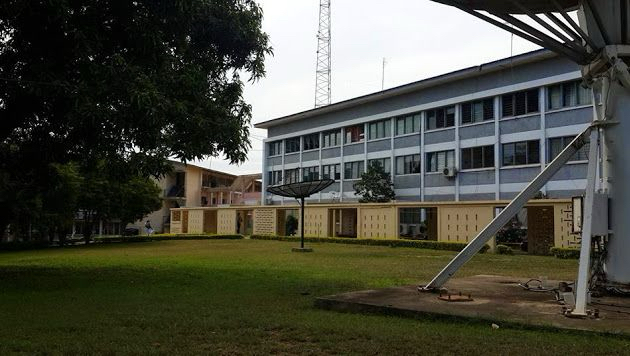
The Ghana Broadcasting Corporation is a giant electronic media (Radio and Television) organization tasked with a mission to lead the broadcasting industry through quality programming, which promotes the development and cultural aspirations of Ghana as well as undertaking viable commercial activities.
GBC has emerged as a force to reckon with: 32 transmitter sites dotted around the country, 6 TV channels, including a regional TV channel, 18 radio stations broadcasting in 27 languages to serve the varied needs of the Ghanaian population.
The History of the Ghana Broadcasting Corporation (GBC)
The Ghana Broadcasting Corporation (GBC) is the nation’s premier public service broadcaster, with a legacy spanning nearly a century of storytelling, nation-building and cultural preservation.
The Early Years: From Station ZOY to BH-2
The journey began on July 31, 1935, with the launch of “Station ZOY” in the then Gold Coast. Operating with just six staff members, the station utilized modest relay equipment housed in a small bungalow near the State House in Accra.
This pioneering venture was championed by the Governor of the Gold Coast, Sir Arnold Hudson—affectionately known as the “Sunshine Governor”—and the technical lead Mr. F.A.W. Byron, a British Radio Engineer. By 1939, the station moved to a dedicated facility, Broadcasting House (BH-2), and began broadcasting in five Ghanaian languages—Twi, Fante, Ga, Ewe, and Hausa—to provide vital news during the Second World War.
Modernization and the Dawn of Television
The late 1950s marked a period of rapid infrastructure growth. In 1958, a third facility, Broadcasting House (BH-3), was constructed to enhance local and international services. This expansion laid the groundwork for visual media:
1965: Black and white television was officially inaugurated on July 31.
1985: Ghana Television made the historic transition to full-colour broadcasting.
Mandate and the Shift to Commercial Service
GBC was established as a true Public Service Broadcaster under the Instrument, 1965 (LI 472), mandated to reflect national progress through culture, education and entertainment.
While initially focused on public subvention, a major policy shift occurred on February 1, 1967, with the introduction of commercial broadcasting. Inaugurated by Mr. J.W.K. Harlley, this move allowed the business community to reach audiences via radio and television, generating revenue to supplement government funding without compromising the Corporation’s educational and cultural mission.
GBC Today: A Digital Powerhouse
Today, GBC has evolved into a modern multimedia giant, boasting of 18 regional radio stations, broadcasting in 27 Ghanaian languages and six specialized digital television channels: GTV, GTV Sports+, GBC News, LifeStyle TV, Garden City TV, and Obonu TV.
Embracing the future of media, GBC has also established its renowned Digital Studio (GBC Digital). This dedicated social media powerhouse bridges the gap between traditional broadcasting and the digital age. By leveraging platforms like X, Facebook, Instagram and YouTube, GBC Digital ensures the “Nation’s Broadcaster” remains interactive and accessible to the youth and the global Ghanaian diaspora, transforming GBC into a competitive, digital-first organization.
GBC’s main line of business is the production and delivery of Television and Radio Programmes on its airwaves to consumers.
The Corporation is under the leadership of the Director- General, assisted by the Deputy Director-General and 10 Directors of various Divisions. The Divisions are namely:
Radio
Television
Technical Production
Engineering
Marketing
Finance
Human Resource
Corporate Affairs
Audit
Legal Services
About Us
The Pillars Behind Ghana's Trusted Voice.
Our enduring commitment to excellence in broadcasting is anchored in a clear mission, a bold vision, and a steadfast set of core values that guide our service to the nation.
Mission
To lead the broadcasting and communication industry through quality programming, which promotes the development and cultural aspirations of Ghana.
Vision
To be the authentic and trusted voice of Ghana.
Core Values
Be committed to providing credible, reliable and quality Broadcasting and Communication Services.
Promote National consciousness, loyalty, integrity, self- reliance and provide strong sense of national identity.
Be guided by a high standard of professionalism, objectivity, accuracy, balance and excellence.
Pursue sound policies and best business practices in dealing with our stakeholders.
Silent Footage of Ghana Broadcasting Corporation television service inaugurated, 1965.
Ghana's first television station, operated by the ghana broadcasting corporation, officially began operations in 1965. The ghana television service was inaugurated by president Nkrumah.